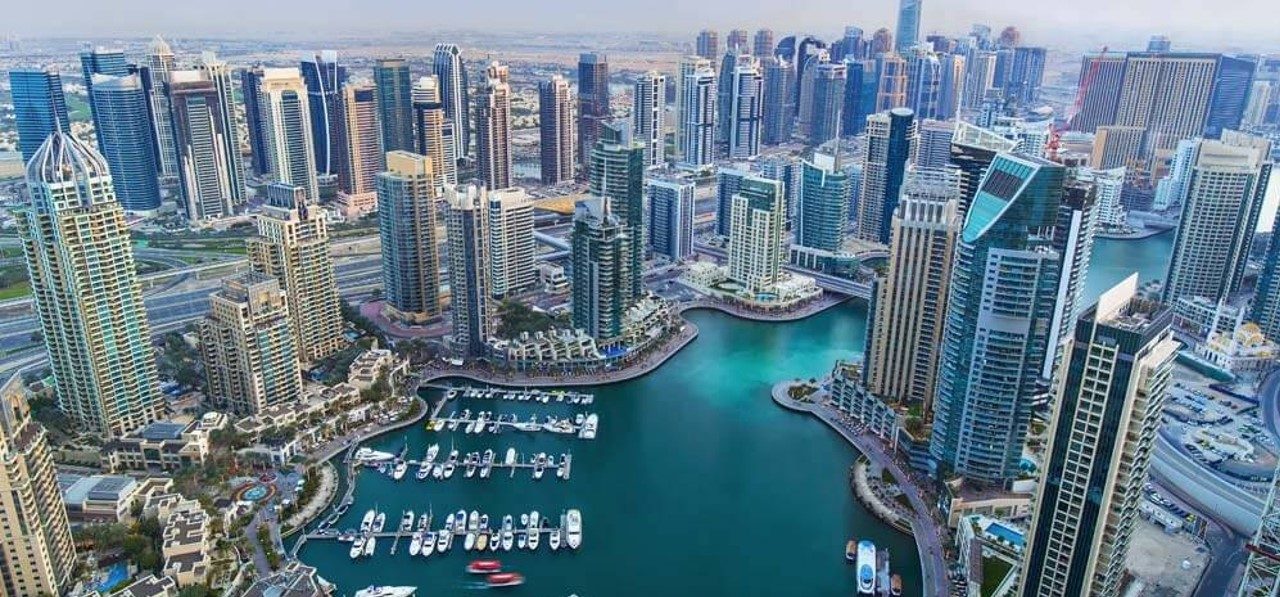
Gain direct access to the Who’s Who of Middle East Capital.
This exclusive collection is the definitive source for verified Family Investment Offices across Dubai, Saudi Arabia, and the wider GCC – built for fund managers, developers, and advisors seeking to engage with the region’s most powerful private investors.
Institutional-Grade and Unavailable Anywhere Else
Derived from proprietary, institutional-grade datasets, these databases represent months of research, verification, and curation. They are not publicly available and cannot be acquired through any commercial data vendor. Each record has been carefully screened to ensure relevance, accuracy, and value for professional outreach.
Built for Real Deal Flow
Whether your focus is Real Estate, Private Equity, Infrastructure, or Venture Capital, these databases give you the inside track to trusted, investable relationships that drive cross-border partnerships and long-term capital connections.
🇦🇪 UAE Family Investment Office Database – Enhanced Version – New for April 2026
Direct Access to Dubai’s Elite Investment Families
This exclusive database opens the door to the UAE’s most active Family Investment Offices – the real decision-makers behind private investments, venture capital placements, and high-value real estate acquisitions.
Why It Matters
Dubai and Abu Dhabi have become global centers of private capital. These Family Offices manage multi-billion-dollar portfolios and actively seek opportunities in:
- Real Estate Development & Hospitality
- Private Equity & Venture Funding
- Technology, Fintech, and Energy Transition Projects
What’s Inside
- Verified list of Family Investment Offices headquartered in the UAE – (195)
- Key executives, decision-makers, and contact roles – (430)
- Email contacts (where available) for direct outreach – (200)
- Suitable for fund managers, developers, and advisors seeking genuine capital relationships
Format: Excel (.xlsx)
Delivery: Manually sent within 24 hours after purchase
Payment: PayPal or Credit Card via secure checkout – No Refunds on Database Sales
Database will be delivered via email as a excel sheet. This will happen in either a few minutes or a few hours depending on what time of day I receive the payment.
View The YouTube Video Description Below
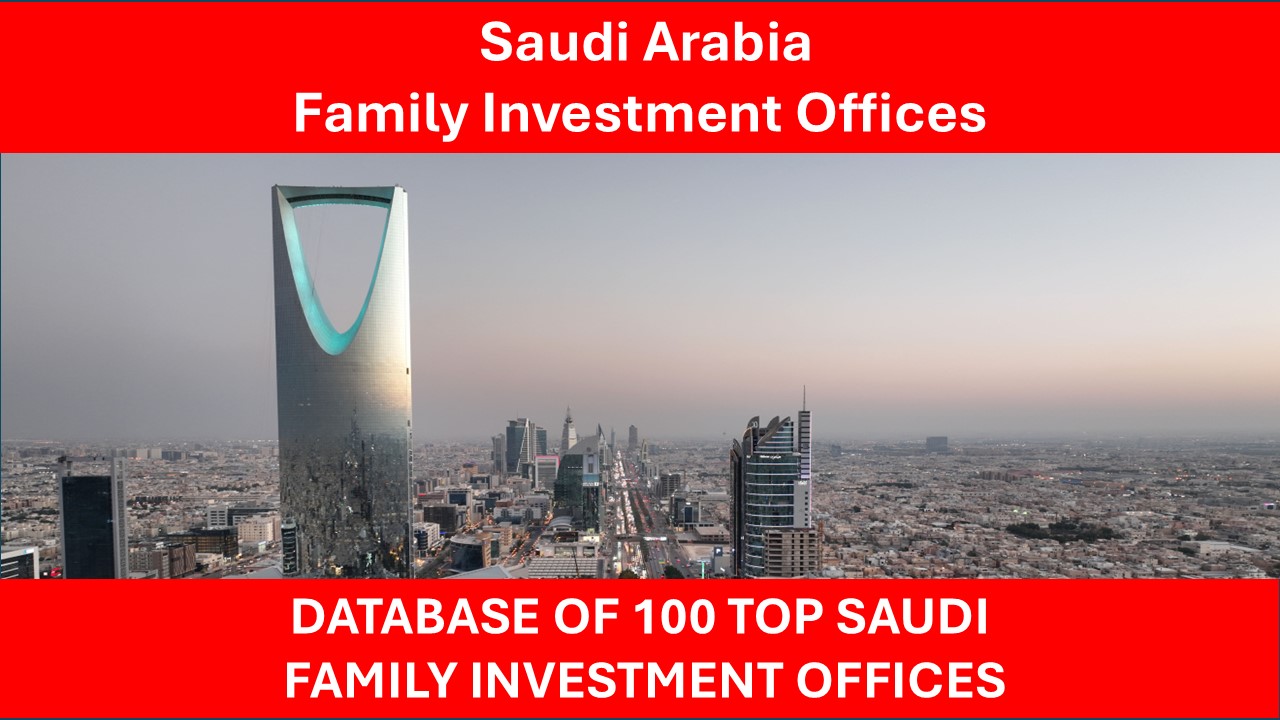
🇸🇦 Saudi Arabia Family Investment Office Database
Connect with the Kingdom’s Most Influential Private Investors
Saudi Arabia is home to some of the world’s largest family-controlled investment groups – active across infrastructure, real estate, private equity, and venture capital. This database provides direct access to these powerful networks driving diversification and innovation within Vision 2030.
Why It Matters
As the Kingdom accelerates its transformation under Vision 2030, Saudi Family Investment Offices are aggressively pursuing:
- Real Estate and Tourism Developments
- Technology, Industrial, and Energy Projects
- Private Equity and Direct Investment Opportunities
What’s Inside
- Verified list of Family Investment Offices headquartered in Saudi Arabia – (100)
- Key executives and investment decision-makers – (280)
- Email contacts (where available) for direct outreach (135)
- Ideal for developers, fund managers, and capital advisors targeting strategic Saudi partners
Format: Excel (.xlsx)
Delivery: Manually sent within 24 hours after purchase
Payment: PayPal or Credit Card via secure checkout – No Refunds on Database Sales
View The YouTube Video Description Below
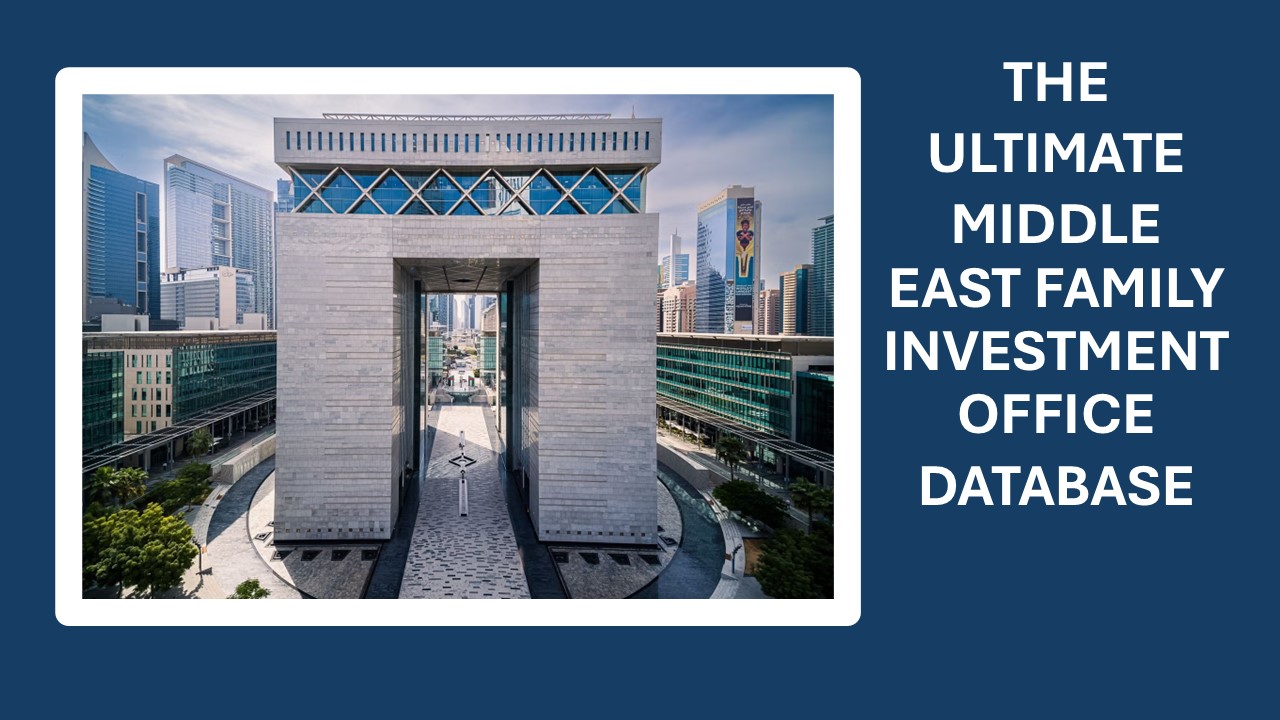
🌍 Middle East Family Investment Office Database (All GCC)
Your Complete Gateway to GCC Private Capital
Gain verified access to the most powerful Family Investment Offices across the Gulf Cooperation Council – including the UAE, Saudi Arabia, Kuwait, Qatar, Bahrain, and Oman. This comprehensive dataset connects you directly to the region’s dominant private investors, wealth managers, and family-controlled investment groups.
Why It Matters
The GCC is one of the fastest-growing sources of private capital globally. These Family Offices are actively diversifying beyond oil and deploying capital into:
- Real Estate, Infrastructure & Hospitality Projects
- Private Equity, Venture Capital & Fund Investments
- Renewable Energy, Fintech & Strategic Technologies
What’s Inside
- 425 Family Investment Offices across the GCC
- 1,025 key decision-makers and executives
- 495 verified contact emails for direct engagement
- Ideal for fund managers, developers, advisors, and placement agents
Format: Excel (.xlsx)
Delivery: Manually sent within 24 hours after purchase
Payment: PayPal or Credit Card via secure checkout – No Refunds on Database Sales
View The YouTube Video Description Below
Note: This Version does not include the 772-Page UAE Family Office Directory
🌍 The Expanding Power of Middle East Family Investment Offices: Mapping Global Capital Influence (2022–2025)
After reviewing my proprietary Middle East Family Investment Office (FIO) Database, I’ve outlined key insights into where private family capital from the GCC and broader MENA region is deploying – and why these families have become some of the world’s most strategic long-term investors in real estate, private equity, and diversified global assets.
Over the 2022–2025 period, more than 65% of active Middle East FIOs have increased direct allocations to cross-border private investments – particularly in real estate, energy transition, logistics, and next-generation tech infrastructure. These families represent a unique hybrid of private capital and sovereign-scale wealth, offering unmatched access to flexible, discretionary investment capital.
Across Saudi Arabia, UAE, Kuwait, Qatar, and Bahrain, this database captures a verified cross-section of 420+ active Family Investment Offices with confirmed deal flow in institutional-grade assets. Together, they form one of the most powerful private capital ecosystems outside the global fund management industry.
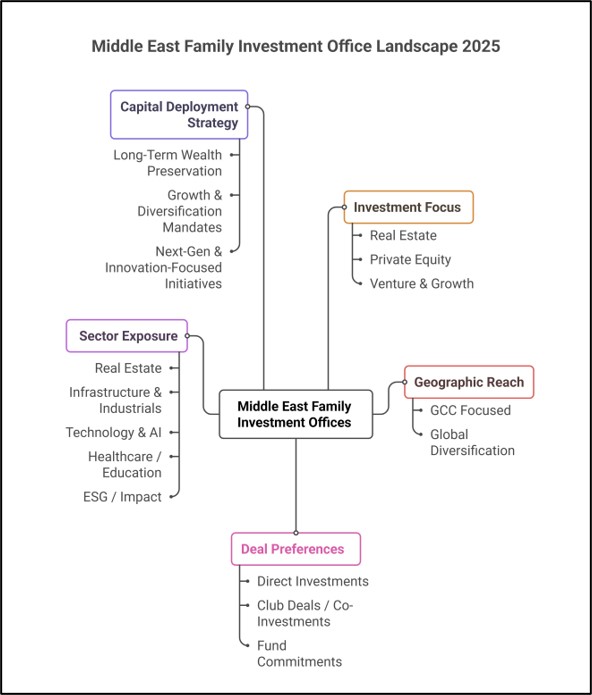
🏢 Real Estate: The Dominant Asset Class
Roughly 72% of all profiled Middle East Family Offices maintain active real estate portfolios – a higher share than any other investor type in the region.
Of this group, approximately:
- 46% focus on core and core-plus income-generating assets (Class A residential, logistics, hospitality).
- 21% are pursuing value-add or opportunistic strategies, often via joint ventures with US or European sponsors.
- 5% engage in development partnerships or direct acquisitions of land for long-term legacy holdings.
Examples include:
- Al Ghurair Investment (UAE) – diversified family group with a global portfolio in industrial and commercial real estate.
- Sedco Holding (Saudi Arabia) – active in hospitality, multifamily, and private equity real estate funds.
- Al Nowais Investments (Abu Dhabi) – combines direct property investments with energy and infrastructure holdings.
This continued real estate dominance reflects the FIO preference for tangible, cash-flowing assets – viewed as both a wealth preservation tool and an inflation hedge amid global market volatility.
💼 Expanding Private Equity & Co-Investment Strategies
Approximately 60% of FIOs in the database now maintain a Private Equity or Direct Investment division, often mirroring institutional fund models.
Of these:
- 30% allocate to buyouts, growth, and control positions in operating companies.
- 18% participate as LPs or co-investors alongside private equity sponsors.
- 12% pursue venture and innovation capital, particularly in AI, fintech, and sustainability-linked ventures.
Notably, UAE-based and Saudi FIOs account for nearly 70% of all outbound family private equity investments – often targeting the US and UK markets for scale, and Southeast Asia for growth.
🌏 Sector Diversification: Beyond Oil and Real Estate
While real estate and PE remain dominant, roughly 40% of Middle East FIOs are diversifying into thematic sectors:
- 17% into renewable energy and decarbonization assets.
- 12% into technology and venture capital (AI, deep tech, fintech).
- 8% into healthcare, education, and life sciences.
- 3% into agribusiness and food security ventures.
This shift reflects a broader “Next-Gen Family Capital” movement – where younger family principals are professionalizing investment structures, aligning with institutional ESG standards, and pursuing global co-investments rather than passive holdings.
🏦 Regional Investment Hubs & Global Reach
The FIO capital network is anchored by UAE and Saudi Arabia, which together represent over 60% of total identifiable family wealth activity in the region.
Key hubs include:
- Dubai and Abu Dhabi – regional headquarters for global diversification strategies.
- Riyadh and Jeddah – home to legacy merchant families expanding into institutional private equity.
- Doha, Manama, and Kuwait City – maintaining strong outbound partnerships into Europe, Africa, and Asia.
Importantly, nearly 45% of all active FIOs in the database have established investment entities in London, Luxembourg, or Singapore, reinforcing their evolution into global capital allocators with institutional-grade reach.
📈 Evolving from Legacy Wealth to Institutional Platforms
The modern Middle East FIO is no longer a passive asset holder – it is a family-controlled investment institution.
Key trends shaping this shift include:
- Professionalization of in-house investment teams (CIOs, investment committees).
- Creation of multi-sector holding structures (real estate, PE, VC, and direct investments under one platform).
- Co-investment partnerships with US and European fund managers seeking aligned capital.
- Integration of ESG, impact, and Sharia-compliant frameworks in deal screening.
Roughly 52% of FIOs in the dataset now operate as hybrid family funds – blending generational wealth preservation with institutional-style deal execution.
💬 Closing Insight
Middle East Family Offices are redefining what private capital means in 2025 – long-term, globally integrated, and partnership-driven.
Their investment behavior increasingly mirrors sovereign wealth funds, but with greater agility and confidentiality.
For fund managers, developers, and advisors, these are the ultimate limited partners and co-investors – capable of deploying $20M–$500M+ into strategic deals across real assets, private equity, and technology.
This isn’t just capital – it’s legacy-driven investment power, reshaping global private markets from Dubai to New York.
📅 October 2025 –
🔗 See my exclusive Middle East Family Investment Office Database if you are raising capital or seeking strategic partnerships with Gulf family capital.
Note: This Version does not include the 772-Page UAE Family Office Directory
Understanding Family Offices in the GCC: Profiles and Patterns from 50 Regional Investors – A Preview of 2026 Fundraising
Family offices across the Gulf Cooperation Council represent one of the most influential private capital pools in global markets. With deep liquidity, multigenerational continuity, and sector expertise built from decades of operating businesses, these families play a central role in private equity, venture capital, real estate, and strategic cross-border investment.
This article draws from a broader Middle East database containing more than four hundred and twenty five family investment offices. The fifty profiles reviewed for this preview capture a varied cross section that illustrates the region’s institutional shift, its expanding sector priorities, and its readiness for global investment deployment in 2026.
1. Legacy Conglomerate-Backed Family Offices
🏛️ These groups evolved from major trading families and diversified corporate houses. Their investment offices operate with scale, governance, and international reach.
• Al Ghurair Group (UAE) with holdings in petrochemicals, metals, packaging, and regional real estate.
• Al Fahim Group (UAE) active in automotive, industrial services, hospitality, and property.
• DICO Group (UAE) representing the Sajwani family with global exposure in real estate, hospitality, manufacturing, and consumer sectors.
• Alghanim Industries (Kuwait) an expansive multi-sector portfolio covering FMCG, logistics, travel, steel, and financial services.
• Ali and Sons (UAE) with interests in automotive, oil and gas, retail, construction, marine engineering, IT, and property management.
• Abudawood Group (Saudi Arabia) a historic trading family with distribution interests across the GCC, South Asia, and North Africa.
These groups operate with multigenerational oversight, established governance committees, and structured investment processes that mirror institutional allocators.
2. Diversified Single Family Offices with Global Mandates
🌐 Many families have transitioned from operating businesses to holding companies supported by professional investment teams.
• Electra Real Estate (Israel) focused on multifamily, single family rental, and commercial real estate across the United States and United Kingdom.
• Ardaas Holdings (UAE) with sector exposure in education, renewable energy, and agriculture.
• Areef Investments (UAE) managing diversified local and international holdings.
• Majid Al Futtaim Trust (UAE) aligned with global real estate, lifestyle, leisure, and retail investments.
• MMR Kassam Investments (Dubai) overseeing cross-border multi sector allocations.
• Al Braik Investments (UAE) with a mandate spanning real estate, oil and gas, hospitality, franchising, and infrastructure.
These modern offices often blend direct ownership with fund commitments and co-investments.
3. Emerging Next Generation Family Investment Platforms
📘 Post 2010 single family offices reflect the priorities of younger family members who prefer diversification, international exposure, and alternative assets.
• Sabban Holdings (Dubai, 2013) directing capital into alternative and private markets.
• Equalis Capital (Dubai, 2013) providing structured, globally oriented investment oversight.
• AlRajhi United (Saudi Arabia, 2010) an investment platform linked to one of the most prominent families in the kingdom.
• Ajyad Economic Company Limited (Saudi Arabia, 2018) representing a newer generation of private capital owners.
• HWH Investments (UAE, 2013) diversified into finance, construction, and technology.
• Narmo Capital (Saudi Arabia and Bahrain, 2014) serving the Al Omran family and several additional Saudi families.
These groups frequently prioritize exposure to venture capital, technology, thematic strategies, climate solutions, and global real assets.
4. Established Investment Offices with Sector Strength
🔧 These offices maintain clear sectoral advantages drawn from decades of operating experience.
• Quadro Capital Partners (UAE) invested in connectivity logistics, fintech, infrastructure, and broader financial services.
• SEED Group (UAE) aligned with technology, healthcare, tourism, hospitality, and real estate.
• SOZA Capital Consultants (UAE) emerging from the Zarouni family, involved in financial services, insurance, capital markets, healthcare, and communications.
• 21 North Advisors (Bahrain) managing conservative allocations for wealthy families.
• Jaidah Group (Qatar) diversified across automotive, heavy equipment, industrial supply, technology, and energy.
Their investment strategies typically combine direct ownership with institutional partnerships and sector driven expansion.
5. Multi Family Offices Providing Institutional Governance
👥 These platforms support families seeking independent oversight, structured allocation frameworks, and diversified access.
• FP Consilium (Lebanon, 2008) with advisory led wealth management capabilities.
• IOME Private Investment Office (Saudi Arabia) a women led multi family office with strong alignment to Riyadh based UHNW families.
• Cukierman Family Office (Israel) supported by a robust asset allocation framework and access to Cukierman Investment House.
Demand for multi family office structures continues to grow as families pursue professional governance without internalizing full investment teams.
6. Investment Offices Integrating International Expansion
✈️ A number of families reviewed show increasing interest in cross-border partnerships, direct transactions, and global real asset platforms.
• Electra Real Estate focusing on North American and UK real estate.
• Al Ghurair Group, Alghanim Industries, and Abudawood Group maintaining footprints across the Middle East, North America, Europe, Asia, and Africa.
• DICO Group with a global hospitality and real estate profile that mirrors institutional allocators.
These patterns highlight a continued shift toward global risk management, geographic diversification, and direct control over international holdings.
Key Themes Identified Across the Fifty Profiles
🧩 Several patterns consistently emerge across the reviewed family offices.
• Preference for co investment structures alongside trusted fund managers.
• Gradual rotation from GCC real estate into international alternative asset classes.
• Rising interest in climate solutions, renewable energy, and sustainability linked strategies.
• Strong appetite for structured private equity, secondaries, and specialized real asset strategies.
• Governance models increasingly aligned with institutional best practices.
• Ongoing strengthening of global networks, particularly in North America, Europe, and parts of Asia.
These characteristics position GCC family offices as stable, long horizon capital partners for 2026 and beyond.
Conclusion
The GCC family office ecosystem is expanding in sophistication, scale, and global influence. Legacy groups maintain their dominance, new offices reflect the ambitions of younger generations, and multi family offices support the rising demand for structured oversight. As 2026 approaches, these investment offices will play a central role in private markets, real assets, and thematic global investment strategies.
Note: This Version does not include the 772-Page UAE Family Office Directory
December 2025
📘 Explore the Middle East Family Investment Office Database
If you are raising capital or seeking strategic partnerships with Gulf family investors, this structured database provides detailed profiles, investment themes, and relationship-ready intelligence across more than four hundred groups.
🏛️ Middle East Family Investment Offices
Capital Allocation Structures, Investment Behavior, and Institutional Intelligence
Middle East Family Investment Offices have emerged as some of the most influential private capital allocators in global markets. Across the Gulf Cooperation Council, these family controlled investment platforms manage multi generational wealth through structured mandates, professional governance, and long term capital deployment strategies.
For fund managers, developers, and advisors, engaging Middle East family capital requires a clear understanding of how these offices allocate capital, evaluate opportunities, and structure investment decisions. This article provides an institutional analysis based on verified data from the Middle East Family Investment Office Database, covering more than four hundred active Family Investment Offices across the UAE, Saudi Arabia, and the wider GCC.
📊 Evolution of Middle East Family Investment Offices
Historically, Middle East family wealth was managed through operating businesses and informal holding structures. Over the past fifteen years, this model has shifted decisively toward institutional investment platforms.
Today, Family Investment Offices in the GCC operate as standalone capital allocation entities with defined mandates, investment committees, and professional management teams. This evolution reflects a deliberate move away from opportunistic investing toward disciplined portfolio construction.
Key drivers of this transition include generational succession, international diversification, regulatory complexity, and increased exposure to private markets.
🧭 Core Capital Allocation Frameworks in the GCC
While mandates differ by family, most Middle East Family Investment Offices allocate capital across three primary segments.
🏢 Core and Defensive Capital
This allocation prioritizes capital preservation and income stability. Real estate remains the dominant asset class, particularly income generating residential, logistics, hospitality, and mixed use assets.
Holdings are typically structured through direct ownership, joint ventures, or family controlled platforms. Capital in this segment is long duration and illiquid, requiring fund managers to demonstrate asset quality, downside protection, and jurisdictional resilience.
📈 Growth and Institutional Alternatives
This segment includes private equity funds, direct operating company investments, co investment structures, and selective private credit strategies.
In this category, GCC Family Investment Offices operate similarly to institutional LPs. They conduct formal due diligence, benchmark managers, and often negotiate fee structures or co investment rights.
Alignment with mandate, strategy maturity, and manager credibility are critical at this stage.
🚀 Strategic and Next Generation Capital
An expanding portion of capital is allocated to venture capital, technology, energy transition, and thematic strategies. This allocation is often influenced by next generation family members and professional CIOs.
Although smaller in percentage terms, this segment represents one of the most accessible entry points for differentiated fund managers seeking Middle East capital.
🧠 Governance and Investment Decision Making
Contrary to common assumptions, investment decisions within Middle East Family Investment Offices are rarely centralized with a single individual.
Most offices operate investment committees that include family principals, professional executives, and external advisors. These committees review opportunities within defined allocation windows and apply strict mandate filters.
Timing, relevance, and strategic fit are therefore critical factors in successful fundraising.
🌍 Regional Differences Across GCC Family Offices
Family Investment Offices across the GCC do not behave uniformly.
- United Arab Emirates based offices often act as global allocators with established international investment vehicles and professional investment teams.
- Saudi Arabia Family Investment Offices increasingly align with Vision 2030 themes, domestic development, and strategic international partnerships.
- Kuwait and Qatar based families tend to emphasize conservative deployment, capital preservation, and long holding periods.
The Middle East Family Investment Office Database reflects these jurisdictional distinctions, enabling targeted and region specific outreach.
❌ Why Generic Family Office Lists Are Ineffective
Public Family Office lists are not designed for institutional fundraising.
Common issues include outdated structures, misclassified entities, lack of investment activity verification, and incorrect identification of decision makers. Most lists fail to indicate whether an office actively invests in funds, prefers direct deals, or is currently deploying capital at all.
Without verified intelligence, outreach becomes inefficient and misaligned.
🗂️ What the Middle East Family Investment Office Database Provides
The Middle East Family Investment Office Database is built to support institutional grade capital engagement.
Each Family Investment Office included has been verified as an active investor with confirmed private market exposure. The database enables users to segment and prioritize prospects based on real allocation behavior rather than assumptions.
Key intelligence includes:
- Active asset class focus across real estate, private equity, infrastructure, and venture capital
- Typical investment ticket sizes and co investment preferences
- Geographic deployment patterns across GCC, Europe, North America, and Asia
- Governance structure and decision making frameworks
- Professionalized versus family led investment models
This level of detail materially improves fundraising efficiency and credibility.
🎯 Capital Alignment Versus Capital Access
Access to Middle East family capital is not the primary challenge. Alignment is.
Family Investment Offices value informed engagement, strategic relevance, and long term partnership potential. Fund managers who understand portfolio construction, mandate constraints, and regional priorities are far more likely to secure meaningful dialogue.
The database is designed to support this alignment by replacing broad outreach with targeted, evidence based engagement.
🌐 The Strategic Role of GCC Family Offices in Global Private Markets
Middle East Family Investment Offices increasingly operate alongside sovereign wealth funds, pension plans, and endowments as peers in global private markets.
Their capital is patient, flexible, and often unconstrained by short term liquidity requirements. This positions them as ideal partners for long duration real assets, private equity strategies, and cross border development projects.
For many fund managers, GCC Family Offices represent not only capital, but continuity across multiple fund cycles.
🧩 Conclusion: Institutional Intelligence as a Competitive Advantage
Middle East Family Investment Offices are no longer informal pools of private wealth. They are family controlled investment institutions with global reach, institutional discipline, and long term horizons.
Successfully engaging this capital requires verified intelligence, structural understanding, and disciplined targeting.
The Middle East Family Investment Office Database exists to meet that requirement.
Note: This Version does not include the 772-Page UAE Family Office Directory
December 2025
📘 Explore the Middle East Family Investment Office Database
If you are raising capital or seeking strategic partnerships with Gulf family investors, this structured database provides detailed profiles, investment themes, and relationship-ready intelligence across more than four hundred groups.
Why Most GCC Fundraising Campaigns Fail Before They Start
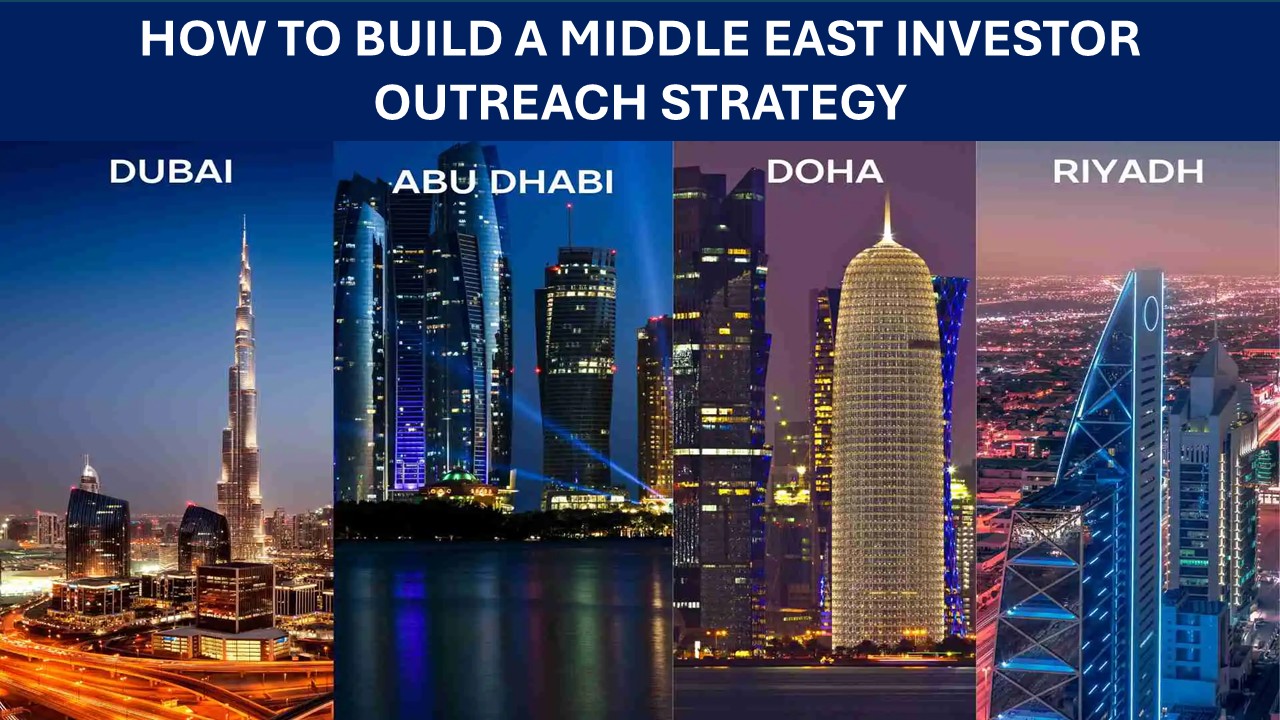
Middle East Fundraising Campaigns
The GCC is one of the most sought-after sources of private capital in the world in 2026. Saudi Arabia’s Public Investment Fund (PIF) was the world’s most active sovereign wealth fund in 2025 by investment spending, deploying US$36.2 billion – an 81% increase over 2024. Qatar Investment Authority (QIA) committed US$25 billion to Goldman Sachs Asset Management as part of an expanded private markets partnership. Riyadh has been described at the Future Investment Initiative conference as ‘the capital of capital, where founders raise funds and global investors meet LPs.’ Dubai continues to attract the highest concentration of family office formation activity in the GCC, with Abu Dhabi specifically positioning itself – through the ADIO/EFOA strategic partnership announced in July 2025 – as the preferred hub for global family capital.
And yet the majority of fund managers who target this capital walk away with nothing. The reason is consistent: they approach the GCC as they would a Western institutional investor market – with a pitch deck, a cold email list, and a timeline measured in weeks. In a market where 78% of GCC family offices now have formal due diligence frameworks (up from 31% in 2021), but where personal relationships remain the gateway to every significant conversation, the mismatch between Western outreach methodology and Gulf relationship culture is the single biggest cause of wasted fundraising effort.
This guide provides the complete operational framework for a GCC investor outreach campaign — from investor profile definition through database construction, email sequencing, first meeting protocol, and pipeline tracking – calibrated to the realities of the Gulf market in 2026.
Key Market Data Points
| Metric | Detail |
|---|---|
| US$36.2B | Deployed by Saudi Arabia’s PIF in 2025 – the world’s most active sovereign wealth fund (Global SWF, 2026) |
| US$25B | QIA commitment to Goldman Sachs Asset Management for private markets and direct investments (February 2026) |
| 78% | GCC family offices with formal due diligence frameworks – up from 31% in 2021 (Dakota.com, February 2026) |
| 64% | Middle East allocators requiring co-investment options before committing to blind pool funds (Dakota.com, 2026) |
| 73% | GCC family offices requiring formal ESG policies – up from 31% in 2021. |
| US$5M–50M | Most active ticket size range for GCC family office investments in PE and real assets |
GCC fundraising is not about finding the right investor — it is about being known before you need them. The fund managers who close Middle East capital in 2026 are those who began the relationship-building process in 2024. The ones who begin outreach when they open a fundraise will, in most cases, be too late.
Step 1 Define Your Ideal GCC Investor Profile
The single most expensive mistake in any GCC fundraising campaign is targeting the wrong investors. A US real estate developer approaching a UAE family office whose mandate is concentrated in Southeast Asian venture capital will not only fail to close capital -they will consume relationship goodwill that might have supported a better-fit referral. Mandate precision is the foundational prerequisite for any campaign that converts.
Investor Profiling Framework
| Profile dimension | Definition questions | GCC-specific considerations in 2026 |
|---|---|---|
| Sector and strategy alignment | Which sectors does your fund focus on? Which sectors are GCC investors most actively deploying in? | Real estate (logistics, hospitality, branded residential, data centres), private equity, and infrastructure attract the broadest GCC family office mandates. Venture capital is growing rapidly – Riyadh has become a VC fundraising hub per FII panel data, April 2026. Private credit is an emerging allocation. Funds with Shariah-compliant structure options access a meaningfully larger investable universe across Saudi Arabia and Kuwait. King & Spalding (2026): Capital is available for clearly articulated thematic strategies – hospitality and branded residence platforms, logistics, data centres, residential rental – not broad undifferentiated mandates. |
| Ticket size compatibility | What minimum and maximum LP commitment size does your fund structure support? | The most active ticket size range from GCC family offices is US$5M to US$50M. Below US$5M, the diligence-to-return ratio is unfavourable for the investor. Above US$50M, most single-family offices require co-investment rights or club deal structures. Sovereign wealth funds (ADIA, PIF, QIA) write US$100M–US$1B+ tickets but require institutional fund structures, formal placement agent access, and minimum 5-year audited track records. |
| Geography within the GCC | Are you targeting UAE-based family offices, Saudi Arabia, Qatar, Kuwait, or Bahrain? | UAE (Dubai and Abu Dhabi): Most accessible; highest density of internationally-oriented family offices; most receptive to direct email outreach from credible managers. Saudi Arabia: Fastest-growing capital pool; Riyadh is the primary hub; Vision 2030 alignment is a meaningful pitch element; formal introductions through advisers more important than in UAE. Qatar and Kuwait: Smaller but significant capital pools; more conservative mandates; longer relationship timelines. Bahrain: Smaller absolute volume; important for intermediary relationships. Each market requires a distinct outreach tone and relationship investment. |
| Relationship context and stage | Are you targeting new institutional relationships, or re-engaging investors from a prior fund? | New relationships require 6–18 months of relationship-building investment before commitment in most cases. Prior fund investors who have experienced your reporting quality and GP conduct firsthand can commit in weeks. Structuring your campaign around both segments simultaneously – re-engagement of prior relationships and measured cold outreach for new ones – is the most capital-efficient approach in the GCC. |
Step 2 Build or Source a Verified Investor Database
The quality of your investor database determines the ceiling on your campaign’s performance.
Database Construction Approaches
| Approach | Time investment | Cost | Accuracy | Best suited for |
|---|---|---|---|---|
| In-house research from scratch | 80–120+ hours for 150–200 contacts | Staff time only – but opportunity cost is high | High risk – GCC contacts change roles frequently; no systematic re-verification mechanism | Managers with existing GCC networks supplementing specific gaps |
| Pre-built verified specialist database | 2–4 hours to review, segment, and configure | US$395–$2,500 depending on scope | Low – professionally maintained; periodic re-verification; mandate and contact-level detail included | Most fund managers building their first or second GCC campaign; best time-to-deployment ratio |
| Conference-based list building | 2–3 events over 6–12 months | US$4,000–£5,000 per event; travel and accommodation additional | Medium – personal contact established, but email and role verification still required post-event | Managers with time for a longer-cycle relationship approach; best combined with database outreach |
| Placement agent engagement | 6–10 weeks to onboard and activate | US$25,000–$150,000 upfront retainer + 1.5–2.5% of capital raised | Low – agent relationships are pre-verified through prior engagement; access to SWF tier | Managers with US$100M+ raises seeking introduction-based access to sovereign wealth funds and the largest family offices |
Consultant Cost Structure
| Consultant engagement model | Typical cost range | What is included | What is not included |
|---|---|---|---|
| Strategy and targeting retainer (no active introductions) | US$4,500–$7,000 per month | Campaign strategy, investor profiling, database intelligence guidance, email sequence development, first meeting preparation, pipeline review | Investor introductions; active deal facilitation; capital introduction fees; database purchase cost |
| Full-service with active introductions | US$5,000–$12,000 per month + 0.5–1.5% success fee | Strategy + introductions + meeting facilitation + relationship management | Database purchase; travel costs; legal/regulatory advice |
| Placement agent (GCC-specialist) | US$25,000–$100,000 upfront + 1.5–2.5% success fee | Deep LP network, RFP prep, full roadshow management | Smaller family office coverage; emerging managers often deprioritised |
Step 3 Write an Outreach Email That Gets Opened and Replied To
GCC Outreach Email Structure
| Email element | GCC-specific guidance | What to avoid |
|---|---|---|
| Subject line | Specific, concise, sector-relevant | Generic subject lines |
| Opening line | Reference specific investment activity | Generic introductions |
| Body | 3 sentences maximum | Long descriptions, attachments |
| Tone | Formal, respectful | Sales language, urgency |
| Closing | Clear call request | Passive closing |
Step 4 Structure Your Three-Touch Follow-Up Sequence
| Touch | Timing | Content approach | Objective |
|---|---|---|---|
| Touch 1 | Day 1 | Initial email | Open conversation |
| Touch 2 | Day 7–10 | Value-add insight | Re-engage |
| Touch 3 | Day 18–21 | Graceful close | Preserve relationship |
| Post-sequence | 90–180 days | New update | Maintain presence |
Step 5 First Meeting Etiquette and Follow-Through in the GCC
| Meeting element | GCC-specific protocol | Common errors by Western managers |
|---|---|---|
| Meeting framing | Relationship-first | Scripted pitch |
| Who attends | Senior partner required | Sending junior staff |
| Hierarchy | Formal titles matter | Over-familiarity |
| Content | Concise narrative | Leading with returns |
| Follow-up | Personal, fast | Generic emails |
| Visit frequency | 2–4 visits per year | Remote-only engagement |
Step 6 Track, Measure, and Manage Your GCC Outreach Pipeline
Pipeline Tracking Framework
| Stage | Definition | Metrics | Duration |
|---|---|---|---|
| Identified | Not contacted | Database size | N/A |
| Contacted | Email sent | Response rate | 1–21 days |
| Engaged | Active conversation | Active leads | 1–4 weeks |
| Meeting held | First meeting done | Notes + next step | Immediate |
| Materials shared | Docs sent | DD requests | 2–8 weeks |
| Due diligence | Active review | ODD progress | 4–12 weeks |
| Soft circle | Verbal commitment | Expected close | 2–6 weeks |
| Closed | Funds committed | Final metrics | Per docs |
Campaign Timeline Benchmarks
| Phase | Duration | Activities | Benchmarks |
|---|---|---|---|
| Preparation | Weeks 1–2 | Profile + database | 150–300 contacts |
| Outreach | Weeks 2–5 | Email campaign | 5–15% response |
| Meetings | Months 2–4 | Calls + travel | 8–20 meetings |
| Due diligence | Months 3–6 | ODD + negotiation | 2–5 investors |
| Close | Months 5–9 | Commitments | US$10M–$150M+ |
Additional Databases for GCC Outreach Campaigns
- Dubai Business Owners & C-Suite Executives Database – 65,000+ verified decision-makers
- Institutional Real Estate Investors Database – 13,680 global institutional investors
Skip the Database-Building Phase
Purchase the 430+ Middle East Family Office Database
Verified contacts · Investment mandates · UAE, KSA, Qatar, Kuwait, Bahrain · Decision-maker emails.
View the Middle East Investors Database via this YouTube Video.
Note: This Version does not include the 772-Page UAE Family Office Directory
Format: Excel (.xlsx)
Delivery: Manually sent within 24 hours after purchase
Payment: PayPal or Credit Card via secure checkout – No Refunds on Database Sales
Database will be delivered via email as a excel sheet. This will happen in either a few minutes or a few hours depending on what time of day I receive the payment.
May 2026

